Overview
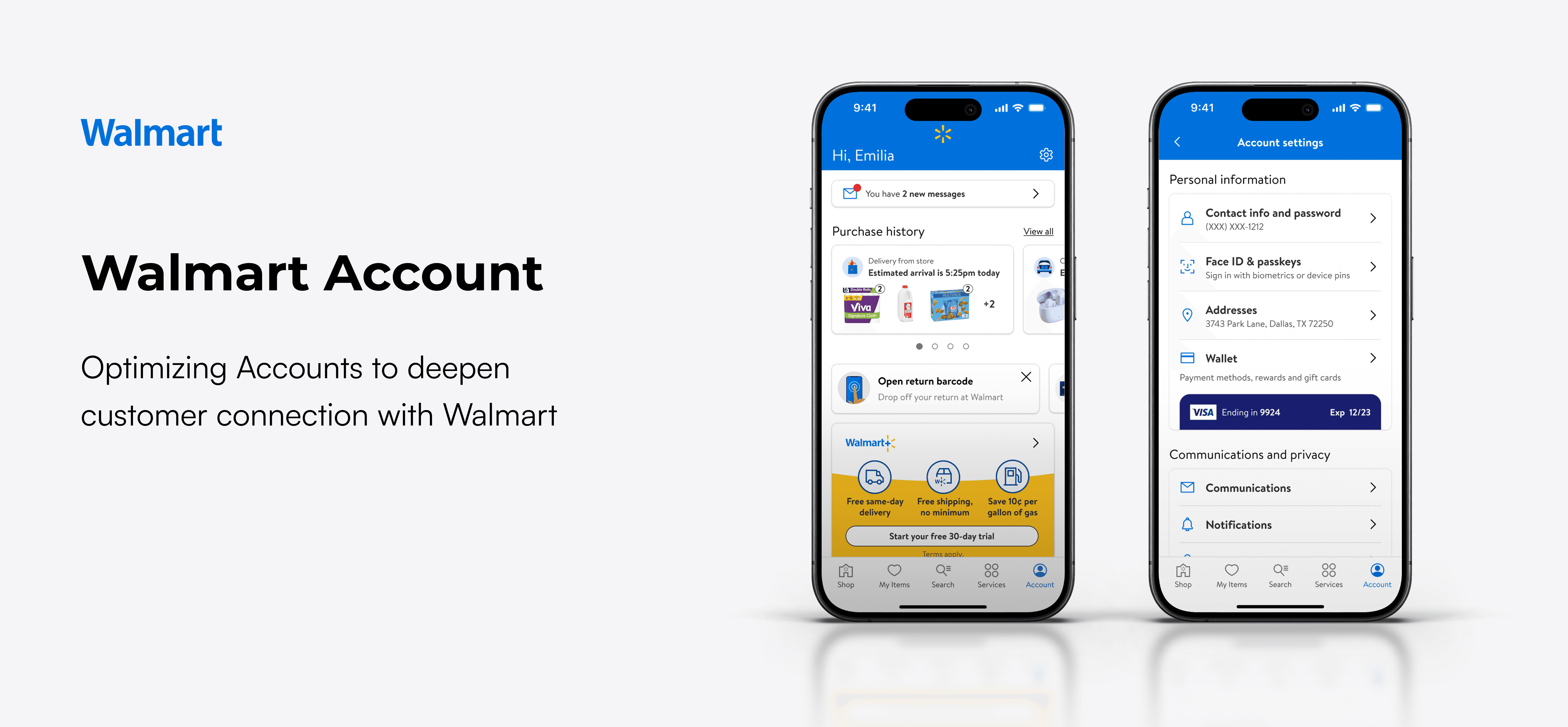
The Walmart Account serves as a central hub for customers to manage personal information, subscriptions (like Walmart+), order history, payment methods, notifications, and preferences across digital and physical experiences.
This project aims to streamline and modernize the Walmart Account experience by creating a scalable, unified system that strengthens the relationship between customers and Walmart. By rethinking how users access and manage their information, the initiative seeks to reduce friction, improve consistency across platforms, and support future growth.
Role
Product Designer
Team
UX Design, Account Product Management, Business, Engineering, Analytics
Tools
Figma
Problem
The current Walmart Account experience is fragmented, making it difficult for customers to manage their information and weakening their relationship with the brand. New features are frequently introduced in a siloed manner without a unified design framework, leading to inconsistent user interfaces, redundant functionality, and increased complexity.
Key issues include:
Varying information architecture (IA) between native and web platforms
A non-scalable framework that limits cohesive growth
Siloed additions creating inconsistent UI patterns
Multiple, uncoordinated methods of customer notifications
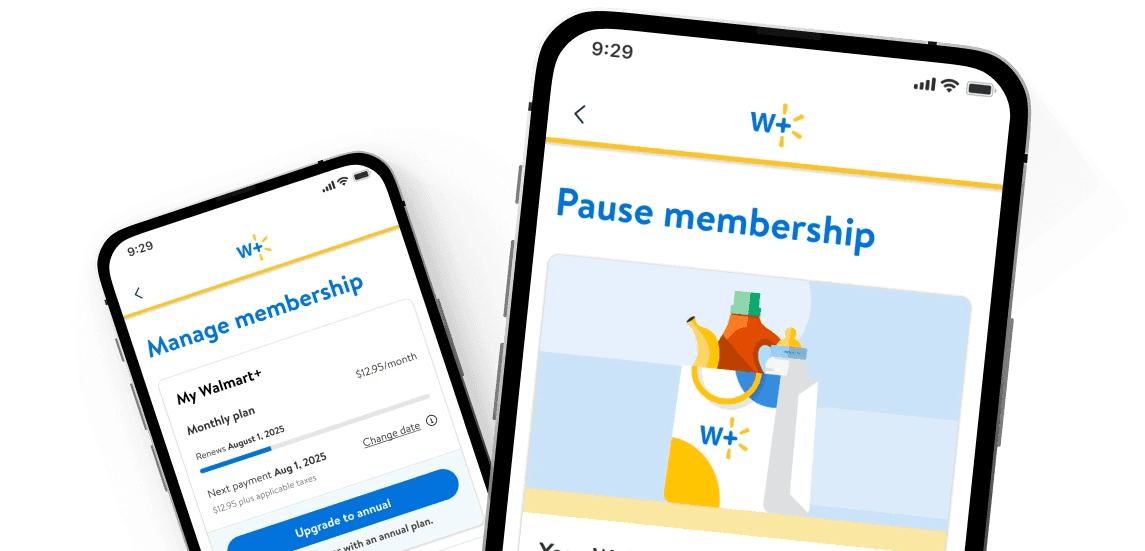
Separation between Customer Account and Walmart+ Account management
Without a scalable and unified design system, these challenges create experience debt, degrade usability, and prevent Walmart from delivering a seamless and trustworthy account experience that supports long-term customer relationships.

Legacy account experience
Driving Alignment Across Teams to Elevate Account
The Walmart Account faced unique engineering and business challenges due to its cross-functional nature. The Account engineering team supports all Walmart teams with customer data and account-related functionality, often executing roadmap items driven by partner teams rather than account-owned initiatives. This decentralized ownership made it difficult to prioritize foundational improvements that would benefit the overall account experience.
Key Optimizations to Improve the Walmart Account Experience
Since account is not a direct revenue driver, it required strong collaboration across Product, Business, and Leadership to align on the long-term value of investing in account-driven initiatives. Design played a pivotal role in leading this alignment—facilitating workshops to uncover customer pain points, understand why customers come to their account, define desired customer behaviors, and envision the ideal account experience.
By combining insights from these workshops with behavioral analytics, Design crafted a strategic vision and roadmap for the future of Walmart Account.
Problem Statement
How might we create a unified and scalable Walmart Account experience that reduces friction, improves consistency across platforms, and strengthens the relationship between customers and the brand?
Designing the Vision
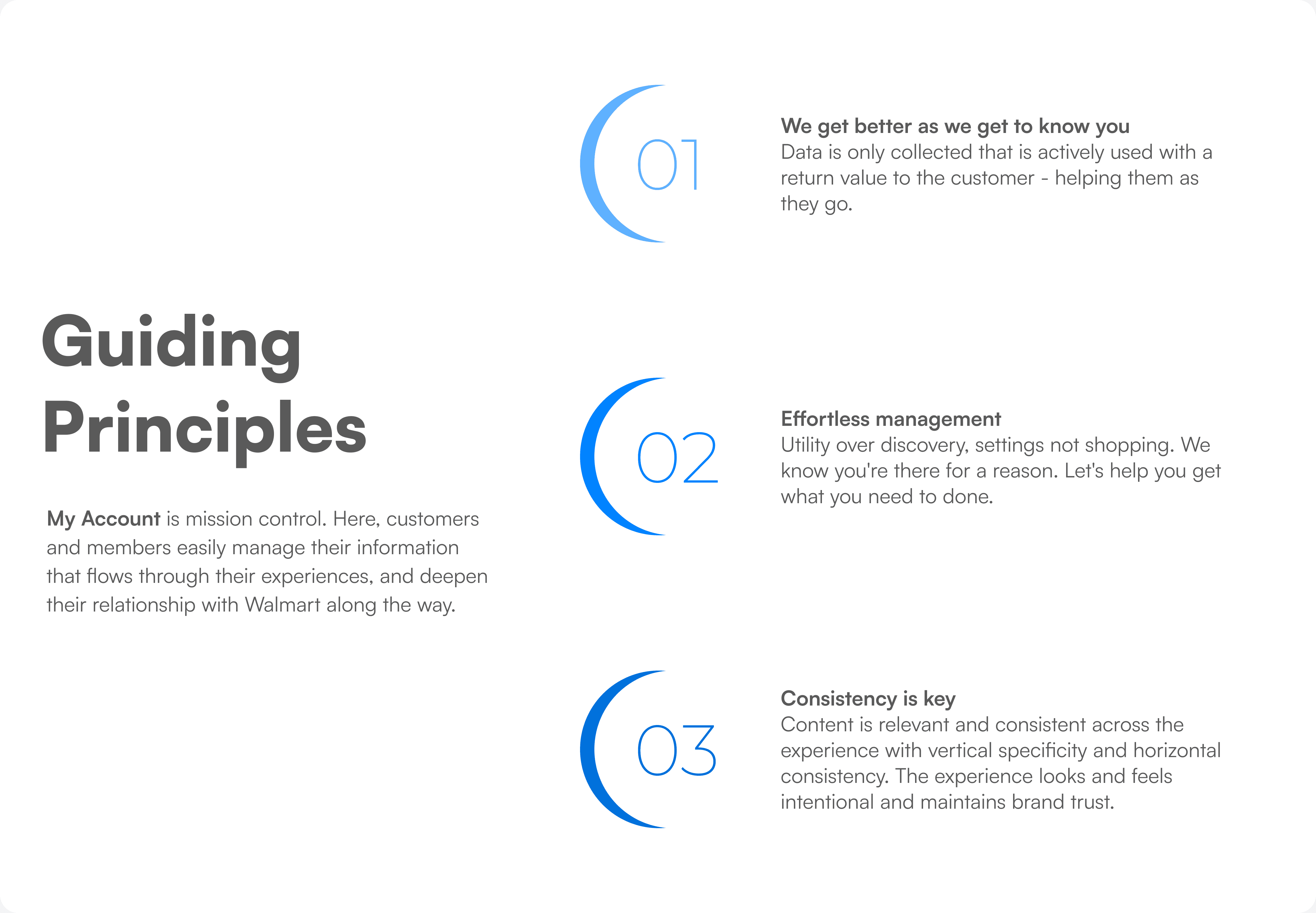
To shape the future of the Walmart Account, the design team established a clear vision grounded in three guiding principles focused on personalization, usability, and cross-platform consistency. These principles emphasized creating a personalized experience that grows with the customer, making account tasks easy and intuitive, and ensuring a cohesive experience across platforms. With alignment across design, product, and engineering, we identified the following key improvements to bring this vision to life:
Separate Account from Settings
Distinguish between utility tasks (e.g. addresses, wallet) and engagement features (e.g. orders, lists, membership) for clearer navigation.Expand Key Sections for Visibility
Show all options upfront to reduce clicks and support quicker task completion.Unify Walmart and Walmart+ Access
Add a second entry point for Walmart+ in Settings to reinforce a single, cohesive account experience.Add Visual Order Tracker
Display multiple active orders with status indicators, supporting the 75% of users checking order updates.Streamline Notifications & Next Best Actions
Combine message center and next steps into one system for clearer, more actionable updates.
Modernizing the Account Architecture for Flexibility and Scale
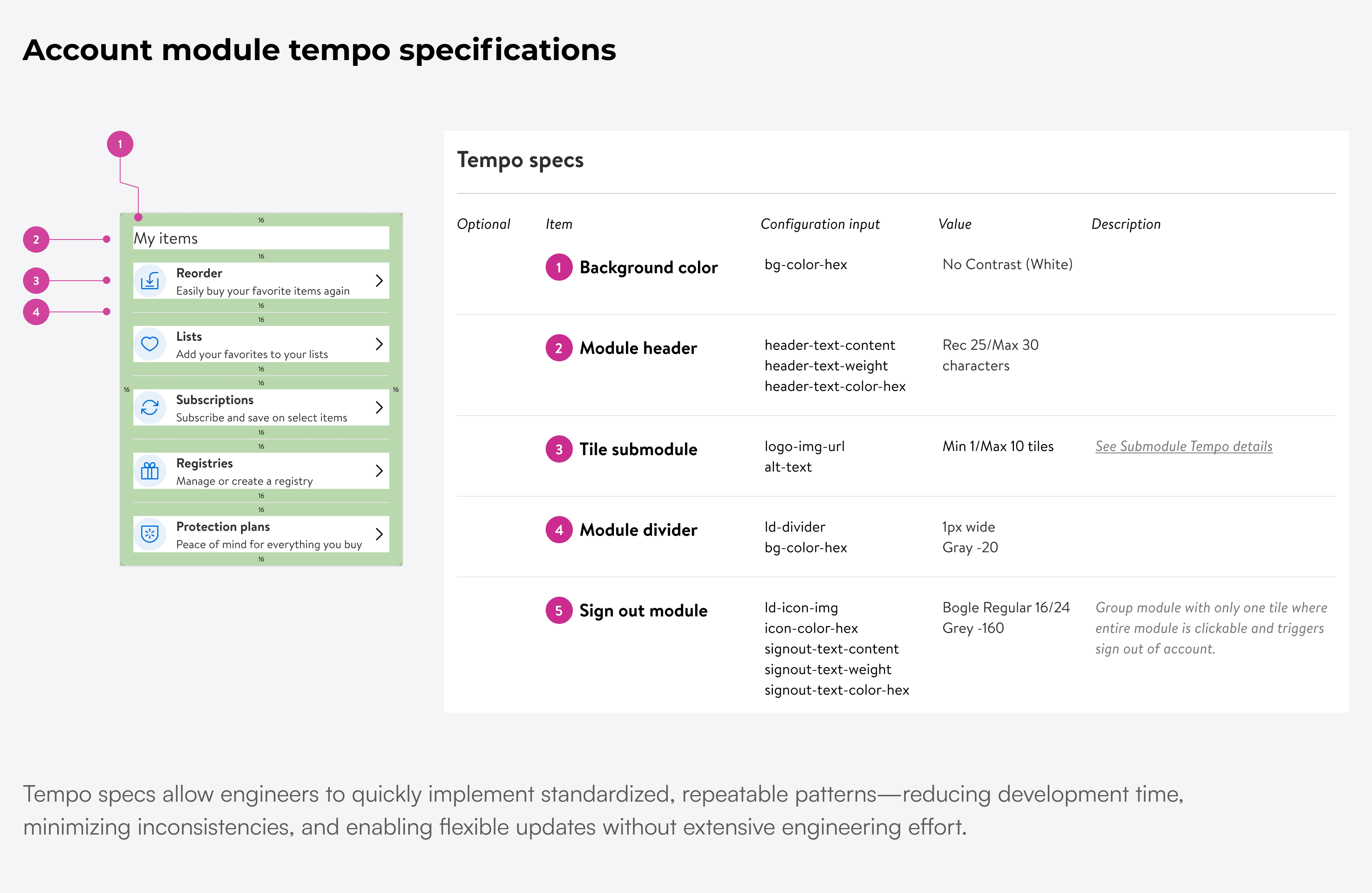
To support a more scalable and adaptable account experience, engineering led key technical updates behind the scenes. One major shift was moving away from hardcoded components and instead leveraging Tempo, Walmart’s internal templating framework. By templatizing repeated patterns and sections within the account, the team unlocked the ability to reorder and test components dynamically—without requiring dedicated engineering effort or full roadmap alignment. This update not only increased operational efficiency but also enabled faster experimentation and optimization, empowering product and design teams to continuously improve the experience in a more agile, data-driven way.
Results and Impact
As a result of the implemented design and technical enhancements, the Walmart Account redesign delivered strong performance gains across key engagement and transactional metrics. Updates to the “My Items” section (Reorder, Lists, Registries, Subscriptions) led to a 2x increase in click-through rate (CTR) and a 61 bps lift in page views. This directly contributed to a 1.25% increase in Add-to-Cart (ATC) from My Items, driving ~90% of an overall 16 bps ATC lift. Meanwhile, design and content updates to the Walmart Cash module tripled CTR, reinforcing the impact of value-led experiences. These engagement gains translated to statistically significant lifts in key business metrics:
+21 bps in GMV
+19 bps in Units
+17 bps in Orders
The updated Purchase History module, which introduced a horizontally scrollable view of multiple orders, was tested over three weeks and showed meaningful improvements:
Clicks on order cards increased 94%
Clicks on pagination dots reached 4.8%
Clicks on “View All Orders” increased 87%
CTR on Account Settings remained steady (~3.7%), with minor, non-significant dips in saved addresses and payment methods. Customer support contacts remained flat, indicating no added friction from these changes.
Importantly, the Account team was successful in securing dedicated engineering bandwidth for a percentage of Account-driven initiatives—a key shift that reinforces the long-term value of investing in foundational experiences, even when they are not directly tied to revenue. Thanks to the strong cross-functional collaboration between Design, Product, Engineering, and Business, the team is now well-positioned to continue evolving the Walmart Account, with a robust roadmap of future enhancements already in motion.